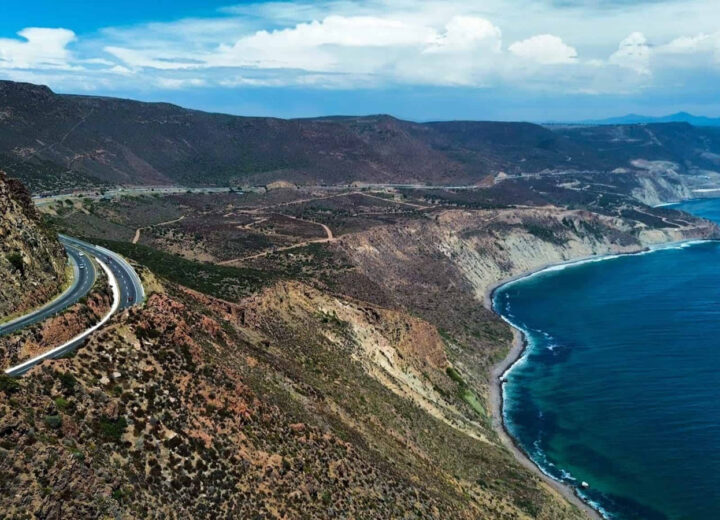

In 1697 a small group of Jesuit missionaries landed on this shore and founded the mission of Nuestra Senora de Loreto Concho. It was the first permanent European settlement on the entire peninsula and the base from which the colonization of the Californias was organized, all the way up to the coast of present-day California. All of that history now fits into a few blocks you can walk.
1697: the beginning
Earlier attempts to settle the peninsula had failed for lack of water. Loreto had a stream and a sheltered bay, and that was enough. The mission was founded on October 25, 1697, and the facade of its church carries the inscription that defines it as the head and mother of the missions of Baja and Alta California.
The expeditions that founded San Javier in 1699, and in the following decades the rest of the mission chain to the north, all set out from here. Loreto was the capital of the Californias for nearly eighty years, until the capital was moved in 1777.
The hurricane of 1829
A cyclone destroyed much of the town and forced the government to move to La Paz. Loreto was left nearly empty and spent more than a century as a fishing village. That historical pause explains why the center kept its low scale: the growth that erased other historic centers in Mexico never arrived here.
What survives
The mission of Nuestra Senora de Loreto
Restored in several stages, it still serves as a church. Its bell tower is the town’s landmark. Twenty minutes inside is enough to grasp the modest, stubborn scale of that project.
The mission museum
Right next door, in the mission’s old outbuildings. Small, well organized, with religious art, tools and documentation of the mission system. It is the best half hour of context available.
Calle Salvatierra
The pedestrian spine connecting the highway to the plaza. Low facades, bougainvillea and local shops. At the end, the plaza and the bandstand.
The malecon
The town’s waterfront, with Isla del Carmen on the horizon. It is not historic, but it is where the town lives at sunset.
An afternoon walk
Leave the hotel at five, walk Calle Salvatierra to the plaza, step into the mission, give the museum half an hour and finish on the malecon in the seven o’clock light. Two and a half hours, no transportation needed. If you want the long version of the mission story, the natural sequel is heading up into the sierra: San Javier and the mission route.
Loreto today
It has been designated a Pueblo Magico and keeps a small population, a marine national park out front and the same bay that determined its founding. This is a place where history has not been turned into a museum piece: the 1697 church still opens every day and the fishermen still head out from the same shore.
If you are coming to see it, our rooms are a few steps from the historic center and the malecon, and the restaurant cooks the food of the region. To plan the whole trip, start with the guide to Loreto.
What to see ten minutes from the center
Loreto’s history does not end at the plaza. A few minutes away is the estuary, where the stream that made the founding possible once emptied out and where water birds nest today. Offshore, Isla del Carmen still holds the ruins of a twentieth-century salt works, with houses, a pier and rail tracks standing; it is visited on a half-day panga trip and is described in the guide to the marine park islands.
Inland, the same mission system left stone irrigation channels, date orchards and olive trees that still bear fruit. That layer of the past is best explored by heading up into the sierra: it is the subject of San Javier and the mission route, the historical excursion that pairs with this walk through the center.
Frequently asked questions
Why is Loreto called the capital of the Californias?
Because it was the first permanent mission on the peninsula and the seat of government of the Californias from 1697 to 1777.
Can you go inside the mission?
Yes, it is a working church and open to visitors outside of service times.
How much does the museum cost?
There is a modest admission fee paid at the door.
What other missions are nearby?
San Javier, an hour up into the sierra, is the best preserved. Farther north are Comondu, Mulege and San Ignacio.
When is the founding festival?
The founding celebrations are concentrated in late October, around the 25th.