
The blue whale is the largest animal that has ever lived: up to a hundred feet long and more than a hundred tons. Every winter it moves into the Gulf of California following the krill, and it stays for weeks in the deep water off Loreto. Watching one breathe a hundred and fifty feet from the panga is one of those experiences that resets your sense of scale.
When the season runs
The window runs from the first week of January through late March. February brings both the best sightings and the best conditions for getting out on the water: cool mornings and flat seas until midday. December and April produce occasional sightings, but they are not reliable dates if the whole trip is being planned around them.
Worth knowing: during the same months, on the Pacific side and a couple of hours away by road, gray whales are calving in the lagoons. They are two different experiences. Blue whales are watched from a distance in open water; gray whales come up to the boats inside the lagoon.
What the trip is like
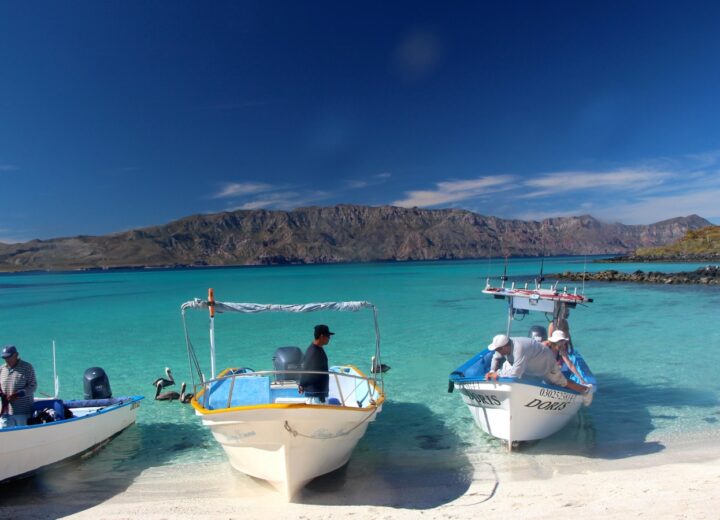
Pangas leave the marina around seven in the morning, ten minutes from our rooms. You head offshore, usually toward Isla del Carmen, where the bottom drops to more than half a mile. The trip lasts four to six hours and normally includes a biologist or certified guide on board.
It is a real search: no sighting is guaranteed. Whales are spotted by the blow, a column of vapor up to thirty feet high that can be seen from miles away. When one appears, the captain approaches to the distance the national park rules allow and shuts off the engine. The whale breathes several times, arches its back and goes down to feed for eight to twelve minutes.
Park rules
Whale watching takes place inside Bahia de Loreto National Park and it is regulated: minimum distance, number of boats per animal, time limit on observation, and no entering the water. Authorized operators carry their permit in plain sight. That is what keeps the season viable year after year.
What to bring
- A waterproof windbreaker and an extra layer: it is several degrees colder on the water than on land.
- A hat with a chin strap, sunglasses and mineral sunscreen.
- Motion sickness medication taken the night before, not as you board.
- Water and something solid to eat. We pack breakfast to go for guests heading out early.
- Binoculars if you have them, and your phone or camera set to burst mode.
How to book
Trips are booked at least a day ahead at the front desk or through experiences. In high season it is worth reserving further out. If the harbor master closes the port because of wind, the trip is rescheduled. When you get back, we keep a hot meal waiting at the restaurant.
What else you see along the way
Almost no trip is only about the whale: there are dolphins in groups of hundreds, sea lions, mobula rays leaping clear of the water and seabirds working the baitballs. In March, humpbacks show up too, and with luck, fin whales.
If you travel outside the season
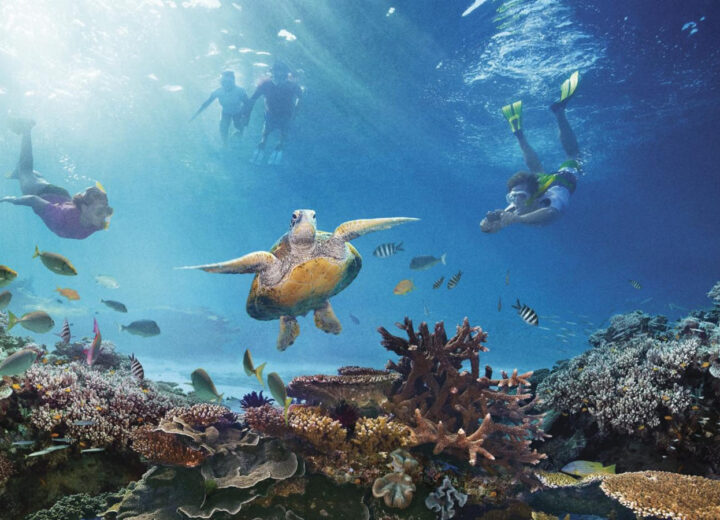
From April through November the sea offers other things: warm water and high visibility for snorkeling, peak sport fishing season and perfect conditions for kayaking. There is a month-by-month comparison in the best time to visit Loreto.
How blue whales behave
Understanding the animal makes the trip much better. Blue whales feed almost entirely on krill and can filter several tons a day, which explains why they come: winter currents in the Gulf push nutrients up from the bottom and concentrate krill.
At the surface they follow a recognizable pattern: three or four breaths in a row, an arch of the back, and a dive of eight to twelve minutes. Captains use that pause to work out where the whale will surface next. The blow, a column of vapor that can rise more than twenty-five feet, is the first thing you see; the dorsal fin, tiny compared with the body, comes last. They rarely breach. What you see is sheer volume sliding past.
Frequently asked questions
When is blue whale season in Loreto?
January through late March, with February the best month.
Is a sighting guaranteed?
No. These are wild animals in open water. In peak season the odds are high, but no serious operator guarantees a sighting.
How long is the trip?
Four to six hours, leaving at dawn and returning mid-morning or midday.
Can you swim with the whales?
No. It is prohibited inside the national park, for good reasons.
Is it suitable for children?
Yes, though kids eight and up tend to enjoy it more given how long the trip runs. See Loreto with kids.
Where do the boats leave from?
From the Loreto marina, ten minutes from the hotel. We arrange transportation for guests.